After an abortive attempt to sell its consulting business to HP in 2000, the PwC leadership was looking for an opportunity to divest consulting. PwC officially announced that it was going for an IPO in June 2002. It fired the Global CEO of consulting and hired a new CEO from the airlines industry. His name was Greg Brenneman. PwC paid tons of money to Wolff Olins, a global brands consultancy, which suggested a new name for the entity “Monday”.
With great gusto, Brenneman announced on June 10, 2002 which was a Monday, ” Monday is a new identity on which to build our company’s future, and it will have meaning and stand for something.” We laughed but were happy that we would become an independent global consulting firm.
Behind the scenes, a Plan B was in the works and our happiness did not last. On 30th July 2002, IBM announced that it would buy PwC Consulting for $3.5 billion plus its Net Book Value, mostly in cash. Although the deal between IBM and PwC had an effective date of October 1, 2002, the due diligence, establishing the net book value, transfer of assets and rebadging of people took time.
The payment of Net Book Value was an easy task as it was the figure that appeared in the books. The division of the $3.5 billion cash had two principal complications: 1. How will you divide it between the consulting partners and the audit and tax partners? 2. How will you divide it among the various countries that owned the consulting practices and contributed them to the global deal? The consulting practices in the countries were owned by local partners.
The first division was less contentious. PwC divided the sale consideration amongst the audit/tax and the consulting partners in accordance with a formula that was worked out with the active participation of IBM. Now came the turn of negotiating the share of each country.
Since we were offered a paltry sum of money for our consulting practice, we declared that we would not sell our consulting practice nor would we participate in the IBM sale. The consulting partners would separate from the global network. We would either do a local IPO or divest the business to a local firm. The global leadership could not believe their ears.
I formed a team of consulting partners led by Joydeep Datta Gupta and code named the project “Rainbow”. The owner of one of the largest IT services companies had evinced interest to buy our consulting practice. We began negotiations in right earnest with his team in Bangalore. In 2002, the valuations of IT services firms were high in India. We engaged Kotak Securities (which was then an affiliate of Goldman Sachs) and Morgan Stanley to do a valuation of our business in case we went for a local IPO with their help. Fortunately, the consulting practice was housed in a separate company called PricewaterhouseCoopers Software Ltd. Both valued the company at between $105 million to $ 130 million. The IT services firm offered to buy us for around Rs 500 crores.
Armed with two valuations and a purchase offer, we rejected the initial offer of the global network. Their offer was based on a simple formula: ascertain what percentage the Indian revenue is of the global revenue and apply that percentage to $3.5 billion. That came to a measly $5 million for all the partners and we said it was unacceptable.
I was very tired with the stress of the aborted HP deal, Monday and the protracted IBM negotiations. I told the Chairman of PwC India that I would be going on a 2-week holiday with my family and would be uncontactable. He agreed and assured me that the heaven will not fall in two weeks.
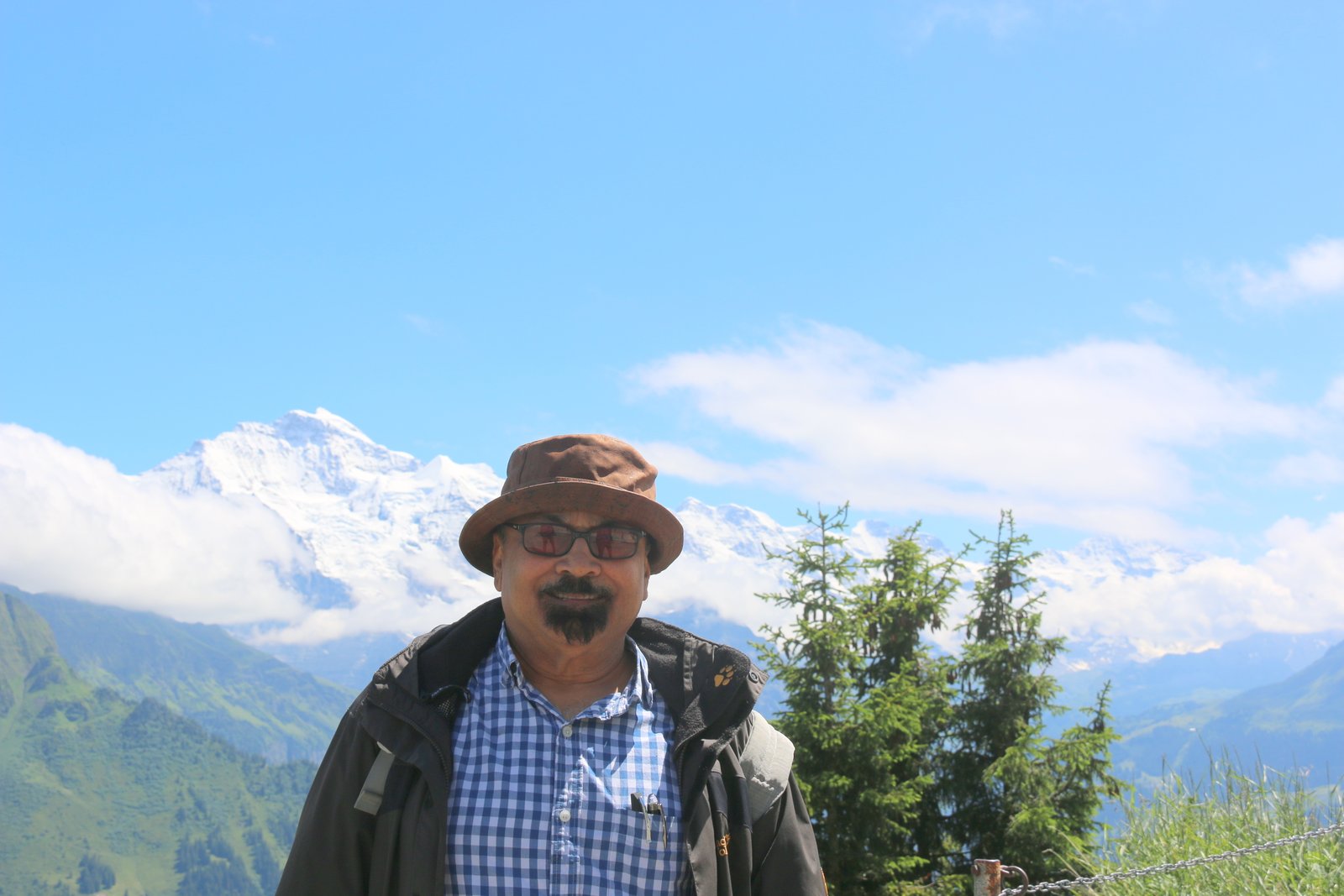
I rented half-a-chalet from a small establishment called Schwizi’s in a village called Rinngenberg not far from Interlaken. There lived the owner Mr.Hans Ulrich Schweizer (hence the name of the holiday rental), his wife and five children. It was almost on Lake Brienz. In the middle of this restful holiday in the idyllic village, I received a phone call. The heaven had fallen. The negotiations had reached a critical phase and the deal had to be closed before Friday. Could I take a flight to New York? “No,” I said, “Please go ahead and seal the deal the best way you can.”
The Chairman said we do not know the full details of the deal, besides how can we conclude the deal without the consulting leader, why will the consulting partners accept it? So I said, “Okay, please ask the Americans to come to Zurich, you guys come as well along with Sharat Bansal and I will catch a train and stay in Zurich for two days.” I had already paid Mr.Schweizer for the two weeks. We kept our luggage in the chalet and my wife, my three little children and I went to Interlaken Ost to catch a train to Zurich.
The chief negotiator on the American side was Chris Kelkar whose father was a doctor from Pune but mother was an American. There were two rather aggressive New York lawyers with him. The negotiation seemed impossible, Kelkar stuck to his $5 million and our opening position was $100 million based on the valuation and the purchase offer. We pointed out that the growth rates, valuation and future potential in India were much higher than the US. Without the Indian cost base and the software factory, no global consulting practice could succeed.
We, however, had two weaknesses and Kelkar had one. Our first weakness: almost all our business was marketed through the global network which would dry up for a while if we broke away. Of course, we had 1800 of the best resources trained in hot skills but the global network would withdraw all support. The second weakness was, if we unilaterally broke away from the global network, PwC India would have to pay a penalty of $10 million. Kelkar’s weakness was embedded in the terms of the IBM deal. If six countries, which included India, did not sign up, IBM could walk away from the deal. He had to have India in the bag.
I found out from the Zurich office secretary, who was keeping the meeting room supplied with plenty of water and tiny Lindt chocolates, that Kris Kelkar’s flight was at 8 PM which meant he had to complete the deal by 6 PM. By 4 PM both of us had threatened to break the deal at least five times. The Chairman A.Ganguli looked visibly anxious as did the incoming leader R.Datta. They pleaded with me not to be too tough with Chris.
Sharat Bansal and I thought the offer was not good enough. We persevered. Around 5 PM, Chris was visibly nervous as he was often threatening us with dire consequences. But we were unmoved. Chris then asked if he could speak to me in private. We agreed. He said, “I have spoken to the global chairman and this is our best and final offer. I have no option left but to pack my bags and go if you do not agree.” It was a several times the initial offer. I agreed and announced it in the room to the visible relief of all present. For the first time we shook hands and everyone laughed.
My children discovered that it was Sharat Bansal’s birthday, the 29th of May. They admonished me for having asked him to come to Zurich away from his family. We went to an Italian restaurant called Santa Lucia to celebrate. My children secretly arranged with the waiters to have a surprise birthday cake with candles and the works and we sang Happy Birthday to Sharat.
While dining I became aware of the sad fact that we had sealed a deal as a result of which Sharat and I would no longer be partners, we would work for different companies. But c’est la vie, that is life.
The Big Deal: the Sale of PwC Consulting
Category: Business