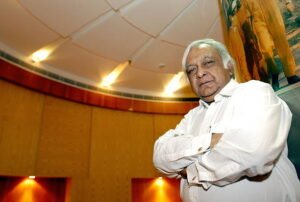
In the January/February issue of 2013, the Harvard Business Review ranked Subir Raha #13 among the 100 Best Performing CEOs of the world. Subir, unfortunately, could not rejoice in this remarkable achievement. He had passed away on February 1, 2010 at the age of 61.
Subir Raha was a paradox. He was a daring entrepreneur at heart. Yet, he worked all his life in monolithic public sector undertakings girdled by bureaucracy. The obstacles spurred him. He took the government-owned upstream oil company to unprecedented heights. During his tenure of 5 years (2001 to 2006), ONGC increased its market capitalization by 10 times to Rs 200,000 crores. It was easily the most valuable company in India.
At a time when privatization of PSUs to the private sector was being prescribed as a panacea, he took a contrarian bet and pulled it off. He acquired the struggling Mangalore Refinery from the A.V.Birla Group, integrated it into ONGC’s the value change and turned it around.
India produces about 25% of its crude requirements. The obvious option then is to acquire shares in upstream oil assets outside India. But with the labyrinthine web of regulations, it was nearly impossible for ONGC to buy properties abroad. He found a way. He expanded ONGC Videsh (OVL), a subsidiary, which was not fettered by these restrictions. From just one property in Vietnam, when Raha took charge, OVL expanded to 24 properties (31 blocks) in 14 countries. From a minor reserve base and zero production when he took over as Chairman, OVL became the second largest upstream oil company of India in terms of reserves and production, next only to its parent ONGC.
He had a ramrod straight spine which did not bow to his political masters. He paid a heavy price for it. He was denied an extension of his contract as CMD although he had two full years left before retirement. The former Petroleum Minister Mani Shankar Aiyar had objected, men who walked the corridors of power told us.
Ironically, Aiyar praised Raha after his death. “Raha was a man worthy of my steel, particularly when we disagreed,” he proclaimed. I am not certain, if Aiyar was paying a Narcissistic compliment to himself or genuinely appreciating Raha’s courage-a taste of which he had had on multiple occasions.
Subir also worked under Ram Naik when he was Petroleum Minister in the NDA Government. Naik is now the Governor of UP. Last year, as the President of the Indian Chamber of Commerce, I had the privilege of hosting him for dinner in Delhi. The conversations inevitably drifted to Subir, who had first introduced me to Mr.Naik. Naik’s appreciation of Subir rang more sincere in my ears than Aiyar’s faint praises.
Subir never learned the art of pleasing his boss nor did he stoop to kow-tow to them. He had a famous anecdote about “pleasing the boss”. He was then an official of Indian Oil Corporation (IOC) posted in Haldia. The Chairman and MD (CMD) of IOC was visiting Haldia and the big man was very fond of angling. Arrangements were made to go fishing at the crack of dawn.
Raha caught a relatively small fish, the General Manager’s fish was much larger but the CMD wheeled in a fish that was spectacular in size. Subir was mystified. How did the fish figure out the corporate hierarchy of IOC so accurately? He later discovered that there was an elaborate planning exercise behind the outcome including deployment of expert divers.
I first met him when he was a director of IOC and his portfolio included Information Technology. PricewaterhouseCoopers (PwC) had been selected to implement the SAP enterprise software in IOC. It was PwC’s largest contract. It was also the largest SAP implementation project in India. Subir codenamed it Project Mathan.
Subir was hands-on and he directly supervised the project. While frequent project review meetings were held with room-full of people from both sides, the real thorny issues were thrashed out in the evening at the IOC directors’ transit accommodation. There, we had brutally frank reviews which were a hall-mark of Subir’s style. He arranged the single malts, invariably Glenfiddich and I, the Cuban cigars. Both of us had a liking for malts and cigars. There was a difference: he chain-smoked cigarettes and I have never smoked white sticks.
In those very intense and late night review meetings, the close bonding and trust developed between us. In May 2001, he was appointed as the Chairman and Managing Director of ONGC. As luck would have it, PwC was already implementing SAP ERP systems in ONGC. The project manager was Mr.R.S. Butola, who later became CEO of ONGC Videsh and finally the CMD of IOC.
In ONGC too, Subir took a keen interest in the ERP implementation. He used to tell me that ONGC implementation was going to be tougher than IOC because there was a difference in “culture” and he proved to be right.
In 2004 December, an ONGC delegation led by Subir Raha met Chief Minister Shri Manik Sarkar in Tripura and announced a 1090 MW gas-based power project. He was criticised for straying from ONGC’s core competency in upstream oil and questioned about the huge investment in Tripura. Subir one day explained to me the positive, cascading impact of the investment in Tripura and added , with a mischievous twinkle in his eye, “ Do not lend your ears to the rumour that I have piloted the investment because my wife is from Tripura!” When I met the Chief Minister in his office last year and mentioned this anecdote to him, Shri Manik Sarkar laughed and said both were true (i.e. the project has made a huge impact to the economy and Subir was a son-in-law of Tripura.)
I think it was in June 2003 (but I cannot exactly remember) Subir was invited by Vishva Bharati to deliver the P.C.Mahalanobis lecture in Santiniketan. Subir called me up to say that he would reach Calcutta by the evening flight and we could travel together. I met him at the airport and he climbed into my stodgy Tata Safari and signalled his car and the security convoy to follow us.
We discussed Tagore, Mahalanobis and Santiniketan while doing justice to the single malt while the car was filled with the smoke and aroma of the Havanas. We reached my home in Santiniketan around 10-30 PM for dinner. Then Subir went to Hotel Camellia and I stayed at my home in Deer Park. Around 2 AM I was woken by a phone call. It was Subir. He said, “We have a minor emergency, can you come?”
I went to his hotel and found that he was scribbling furiously on a note sheet. When he saw me he laughed and handed me the letter of invitation. It clearly said that the lecture in the morning was to be delivered in Bengali and Subir’s speech was in English. We struggled together to translate the speech arguing about the exact Bengali term for certain words like “wealth”. By 5-30 AM we were done.
Subir delivered the lecture around 11 AM on a make-shift stage created in front of Syamali, Gurudev’s mud house and summer retreat in his ashram at Santiniketan. Subir spoke confidently in chaste Bengali to an enthralled audience. The proverbial swan gracefully glided across the serene lake, there was not a hint of the furious paddling that takes place beneath the water’s surface.